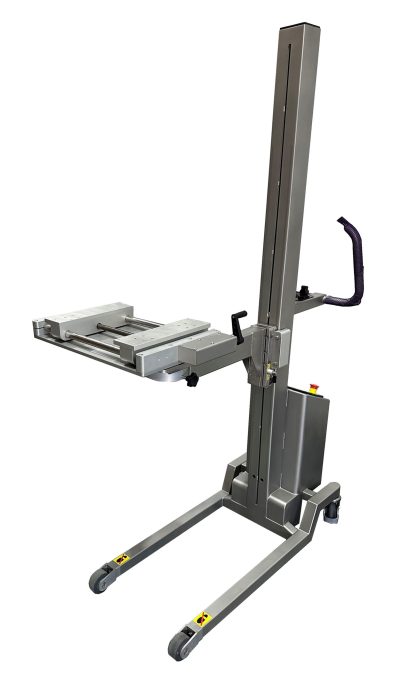
Tool and Die Block Lifting Equipment

Packline Ltd supplies a complete range of bespoke stainless-steel tool and die lifting solutions designed for safe, efficient handling of heavy tooling, moulds, and dies in manufacturing and engineering environments. Our die handling equipment reduces manual handling risks, protects valuable tools, and streamlines operations such as die changeovers, keeping production running smoothly.

Features
  • Bespoke Solutions Manufactured to Customer Specifications
  • High-quality materials handling equipment
  • A wide range of industries including Food, Pharmaceutical, Medical and FMCG
  • UK Design and Manufacture
Packline  | Tool & Die Lifting 0

Tool & Die block lifting refers to handling heavy tooling, dies, cutters and moulds used in production machinery. These items are often bulky, heavy, hot, awkward to manoeuvre, and need precise placement. Improper handling can cause injuries, equipment damage, long downtime or contamination (in hygienic or clean-room environments). So having purpose-built lifting equipment improves safety, efficiency, operator ergonomics, and often compliance with safety or hygiene standards.

Packline (UK) offers a dedicated “Tool & Die Lifting” product line, especially in their Stainless Steel / ‘Compac’ range, designed to move tooling safely between storage and machines.

Die block / tool lifting is a critical need in many manufacturing and packaging operations: it reduces manual handling risks, speeds up tool change-over, improves safety, and supports regulatory / hygiene compliance. Packline’s tool & die lifting systems offer many of the features you’d want—good capacity, hygienic stainless-steel construction, adjustable attachments, robust safety features and mobility. If you’re reviewing or procuring such a system, defining your tooling size, weights, environment and movements clearly will help ensure you get a solution that improves productivity, safety, and flexibility.

Here are the major features and options of Packline’s die-block lifting systems, to understand what you can get—and what you might need.

FeatureWhat Packline Offers / OptionsWhy It Matters
Capacity & Lift HeightStandard lifting capacities up to ≈ 250-300 kg depending on model; lift heights up to 1,850 mm, with bespoke designs going up to 3,000 mm.Ensures you can handle your largest tooling safely; sufficient height to reach machines or storage racks.
Material & FinishTypically stainless steel (304, 316/316L), with polished finishes possible. IP ratings options (IP30C or IP65) for environmental protection. (Packline)Important for hygiene, corrosion resistance, cleanliness (especially in food, pharma, medical).
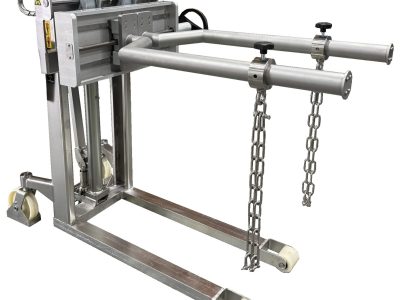
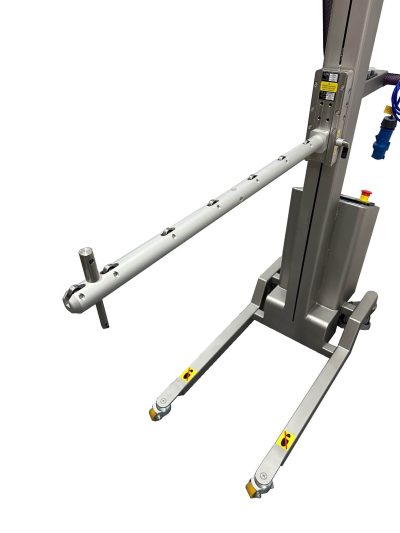
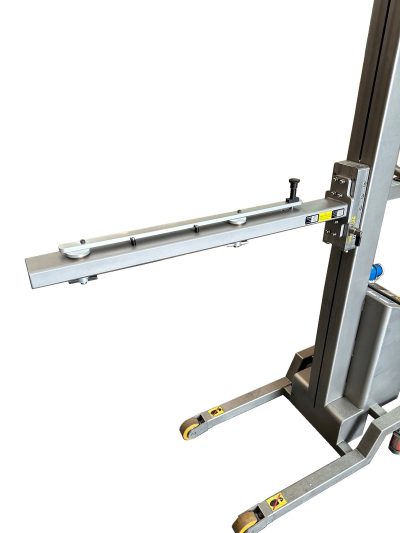
Attachments & Die Block ConfigurationsUses a die block attachment with four chains hung from a sliding hub support attached to a single-spindle or twin-spindle attachment. Star knobs to lock die blocks in place. Standard & heavy-duty versions.Chains allow safe attachment even when die is hot. Quick adjustment allows adaptability for tooling size/shape.
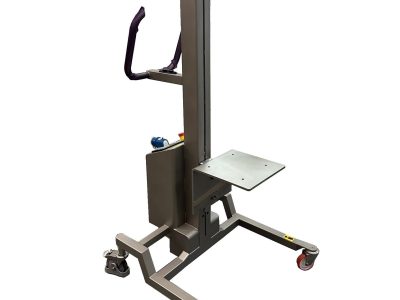
Mobility & FootprintWheels: non-marking, anti-static casters; front wheels options (50mm / 85mm pallet); rear wheels with brakes (“stop-fix”) and safety foot guards. Compact footprint for narrow spaces.Easier to manoeuvre; reduces space demands; safer in limited working areas.
Operation & PowerLift/lower via direct-drive DC motor using a ball screw. Battery powered systems with dual batteries; buttons placed ergonomically on handle bars. Electrically safety-features: overload limit, electro-mechanical brake holds load in place if power fails; emergency stop.Ensures safe, reliable lifting; lowers operator strain; risk mitigation in case of power loss.
ComplianceUnits are CE and UKCA compliant. Designed for multiple industries including Food, Pharma, Medical, FMCG, Automotive, Aerospace, etc.Legal safety, suitability for regulated industries etc.

If you’re considering implementing tool/die block lifting equipment, use these questions to guide your specification. Packline’s engineering service makes a lot of these options available if you provide the right information.

  1. Tool / Die Details
    • What is the maximum weight of the tooling to be handled? What are the dimensions, particularly where the lifting points can be attached?
    • Is the tooling ever hot? (Chains must handle heat safely.)
    • How many tooling items need to be handled, and how variable are their shapes / sizes?
  2. Lift Height & Reach Requirements
    • How far up you need to lift, what clearance is there above, and what reach is required to put the tool in place. Consider storage racks, machine access etc.
  3. Environment & Hygiene Conditions
    • Do you have clean-room or food / pharma environment? Stainless steel, polished surfaces, easy-clean designs will be needed. IP rating for electrical components if exposed to washdown or moisture.
  4. Attachment Configurations
    • Do you need single spindle, twin spindle, or other forms of attachment? Chains or straps, capability to secure the tooling safely (e.g. star knobs, hooks)?
    • Do you require accessories like wide straddle legs or forward movement to allow access into tight spaces?
  5. Mobility vs Fixed Installation
    • Is the lifter going to be moved between machines, or fixed in one place? For mobility, wheels & brakes matter; for fixed, perhaps bolted base is acceptable.
  6. Safety Features & Risk Controls
    • Ensure overload protection, power loss safety (i.e. brake holds the load), robust emergency stop. Also ergonomic controls, chain layout to spread load etc.
    • Training of operators is essential.
  7. Maintenance, Spares & Support
    • Chains, star knobs, attachments can wear; battery systems need charging and care. Make sure parts are available.
    • Inquire about after-sales service, spare parts etc.
  • Use correct lifting points: Always attach chains/hooks at secure, designed lifting points—not ad hoc welds or fixtures.
  • Spread the load: Use all chains properly to distribute weight; avoid loading only one side; this prevents torque and twisting.
  • Check the tooling temperature: If tools are hot, ensure chains and die-block materials are rated; ensure safe grip.
  • Keep alignment precise: Misalignment when fitting dies into machines can damage both tool and machine; accurate positioning and minimal sway in lifting equipment helps.
  • Regular inspection & testing: Chains, star knobs, brake systems, motors etc should be periodically inspected. Any sign of wear, damage or looseness must be addressed.
  • Operator training: Ensure staff understand the controls, emergency procedures, load limits, and how to secure the tool properly.


  • Tool and Die Lifters
    Precision-engineered devices for safe and accurate handling of heavy dies, moulds, and tooling components.
  • Die Block Lifters
    Attachments with single or twin spindles for secure lifting and positioning of dies, cutters, and awkward-shaped tools.
  • Die Handling Trucks
    Robust trucks for moving tools and dies, with load capacities of 300kg. Available in manual or fully powered versions.
  • Die Rolling Systems
    Ball, roller, or bar-based systems enabling smooth transfer of dies into and out of press beds with minimal effort.
  • Enhanced Safety – Reduces injury risk by eliminating manual lifting of heavy tooling.
  • Greater Efficiency – Accelerates die changeover processes, minimising press downtime.
  • Lower Costs – Protects expensive tooling and reduces labour requirements.
  • Higher Productivity – Keeps presses running with rapid tool transitions.
  • Precision Handling – Ensures controlled, accurate movement of high-value or delicate tooling.
  • Manufacturing & Engineering – Essential for heavy tooling management across industries.
  • Automotive & Aerospace – Reliable solutions for handling precision-engineered dies and moulds.
  • Food & Printing Industries – Stainless steel lifters and trucks ideal for hygienic and cleanroom environments.
  • Die Changeover Systems – Designed to support fast, safe, and efficient tool transitions on press beds.


Packline  | Tool & Die Lifting 9

Get in touch

Sending...
Uploading Files
Field is required
Field is required
Invalid email
Request a Call Back Quick Enquiry